Indie Founders Don't Have a Product Problem. They Have a Distribution Problem
Most indie SaaS dies in silence, not from bad code. Here's why cold outreach is broken, and how a curated collaboration layer like Indie Chains turns distribution into a repeatable system.

Girish Kotte
June 24, 2026 · 8 min read
I've shipped enough products to know the quiet way most of them die. It isn't a crash or a bad review. It's a launch tweet that gets 11 likes, a Product Hunt day that spikes and flatlines, and then weeks of staring at an analytics dashboard that never moves. The code works. The product is genuinely good. Nobody knows it exists.
That's the uncomfortable truth I wish someone had told me earlier: most indie founders don't have a product problem. They have a distribution problem. And distribution is the one thing the "just build it" crowd never teaches you to do.
The launch high is a trap
Here's the cycle almost every indie founder runs, including me on my first few products.
You build for months. You launch publicly. You get a 48-hour dopamine spike from Product Hunt, X, and a few Slack communities. Then the traffic curve does what it always does: it falls off a cliff. So you reach for the only growth lever you've heard of: outreach. Backlink requests. Cold partnership emails. "Hey, love your blog, would you be open to a guest post?" sent to 200 strangers.
The response rate is brutal, and it deserves to be. Those emails are generic, impossible to personalize at scale, and completely disconnected from how the person on the other end actually works. You're asking an editor to do you a favor with zero context about their site, their audience, or what's in it for them. It's spam with better grammar.
The problem isn't that outreach doesn't work. It's that untargeted, context-free outreach doesn't work, and that's the only kind most of us know how to send.
Why "build a better product" won't save you
The seductive lie of indie hacking is that if the product is good enough, distribution takes care of itself. Word of mouth! Virality! It rarely happens, because word of mouth needs a first mouth. Somebody has to find you before they can tell anyone.
Look at how indie SaaS actually grows when it grows. It's almost never one giant channel that flips on overnight. It's a hundred small, compounding wins:
- A guest post on a niche blog your exact buyer reads
- A founder you respect mentioning you in their newsletter
- A "tools I use" page linking to you
- A cross-promo swap with a complementary product
- A trust-based referral from someone who's used you
None of those are paid acquisition. None of them scale through a credit card. They all run on relevance and trust, two things cold outreach actively destroys. Every founder I know who broke past the flatline did it by building a network of aligned partners, not by buying more clicks.
The real problem: distribution has no operating system
So why don't founders just do more collaboration if it works so well? Because the workflow is a nightmare held together with tape.
Right now, building distribution through relationships means stitching together:
- A spreadsheet of sites you think might be relevant
- Manual research to find the right person and email
- A separate SEO tool to check if the site is even worth it
- Cold email or DMs to make contact
- Another spreadsheet to track who replied
- A doc somewhere to manage the actual placement
Six tools, zero context flowing between them, and a process so painful you do it once, get discouraged, and quit. Paid ads feel easier precisely because they have an operating system: a clean dashboard, one place to act. Collaboration has none of that, so founders default to the channel with the better UX even when it converts worse.
That gap is the whole opportunity. Distribution doesn't have an operating system yet. It needs one.
 Indie Chains: link building feels safer when every site has a reason to be there.
What a curated collaboration layer actually does
This is where something like Indie Chains gets interesting, not as another directory but as a collaboration infrastructure layer for founders who want to grow through relevance instead of volume.
The operating model is simple and it's the part that matters: approved members discover relevant sites, send contextual collaboration requests, exchange messages, and manage placements, all in one workflow. Read that again and notice what's missing. No spreadsheet. No tool-switching. No cold-emailing strangers who never opted in.
Two design choices do the heavy lifting:
1. Vetting on both sides. When everyone in the network is an approved indie founder or site operator, the baseline trust is already there. You're not pitching into the void; you're reaching someone who chose to be reachable. That single fact changes response rates more than any subject-line trick ever will.
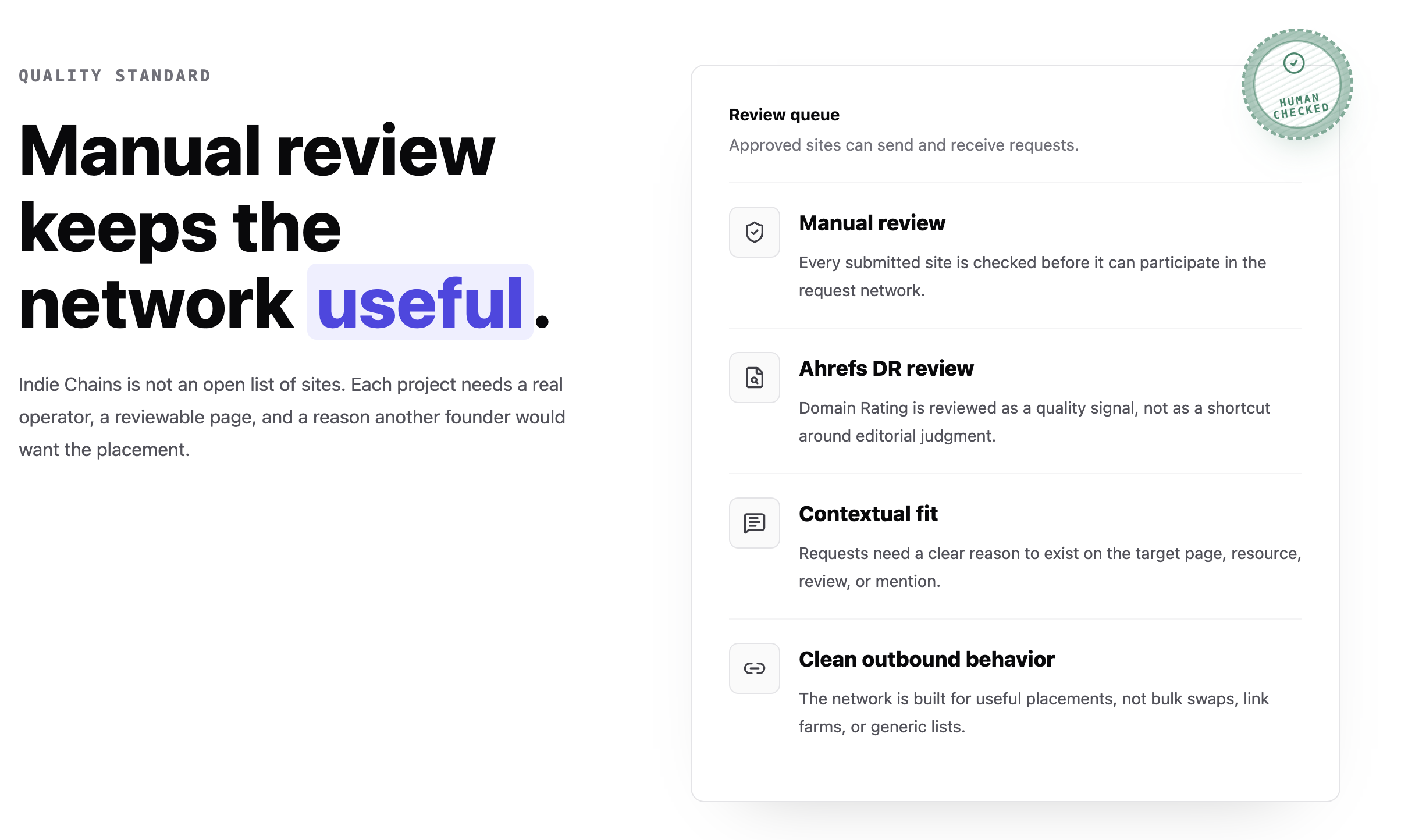 Indie Chains' quality standard: every site passes manual review, an Ahrefs DR check, contextual-fit screening, and clean outbound behavior before it can join the request network.
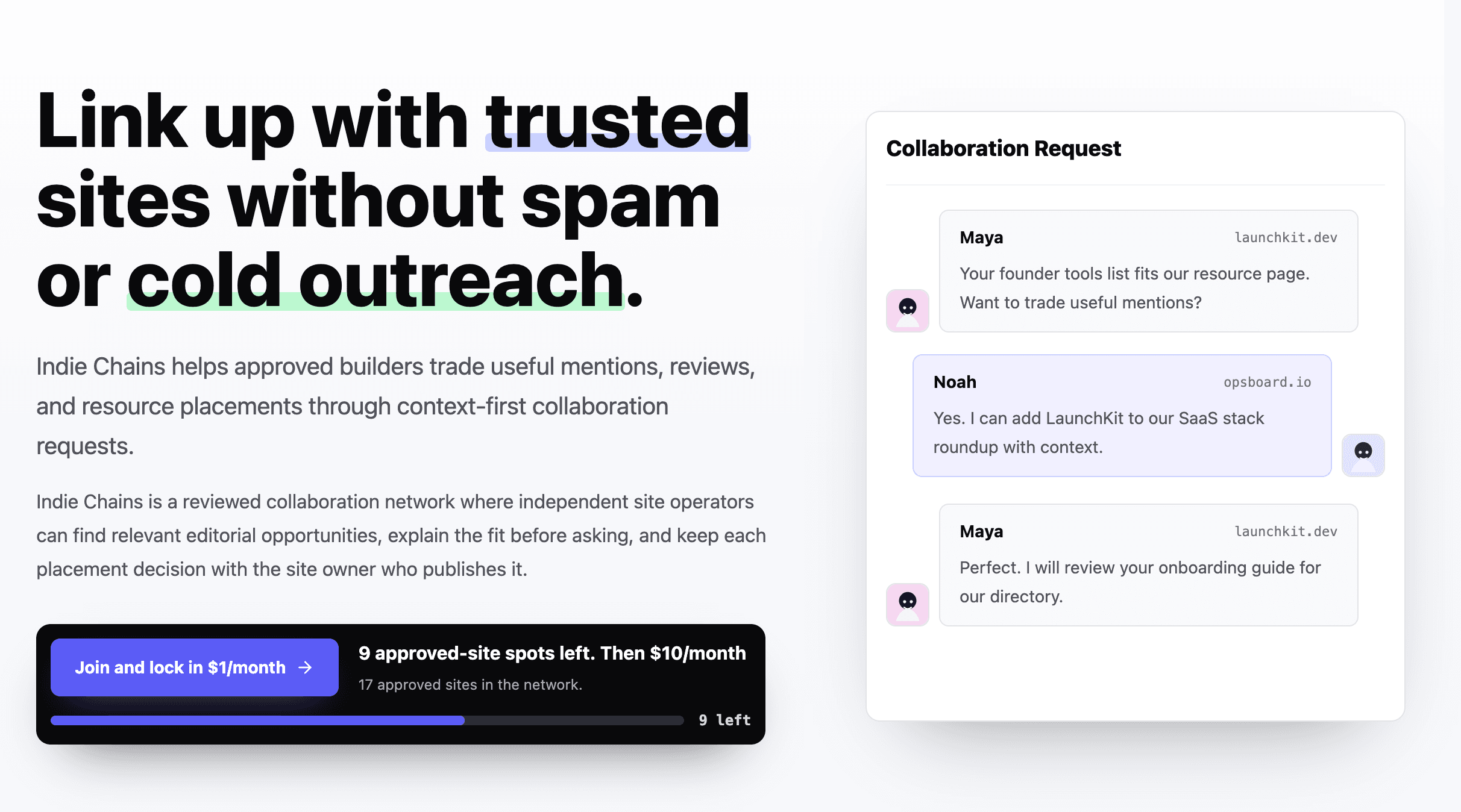
2. Context built into the request. A contextual collaboration request carries the why: what you do, why this site, what's in it for both sides. It's the opposite of the blast email. It's the difference between "please link to me" and "your readers struggling with X would get real value from this, here's a specific angle."
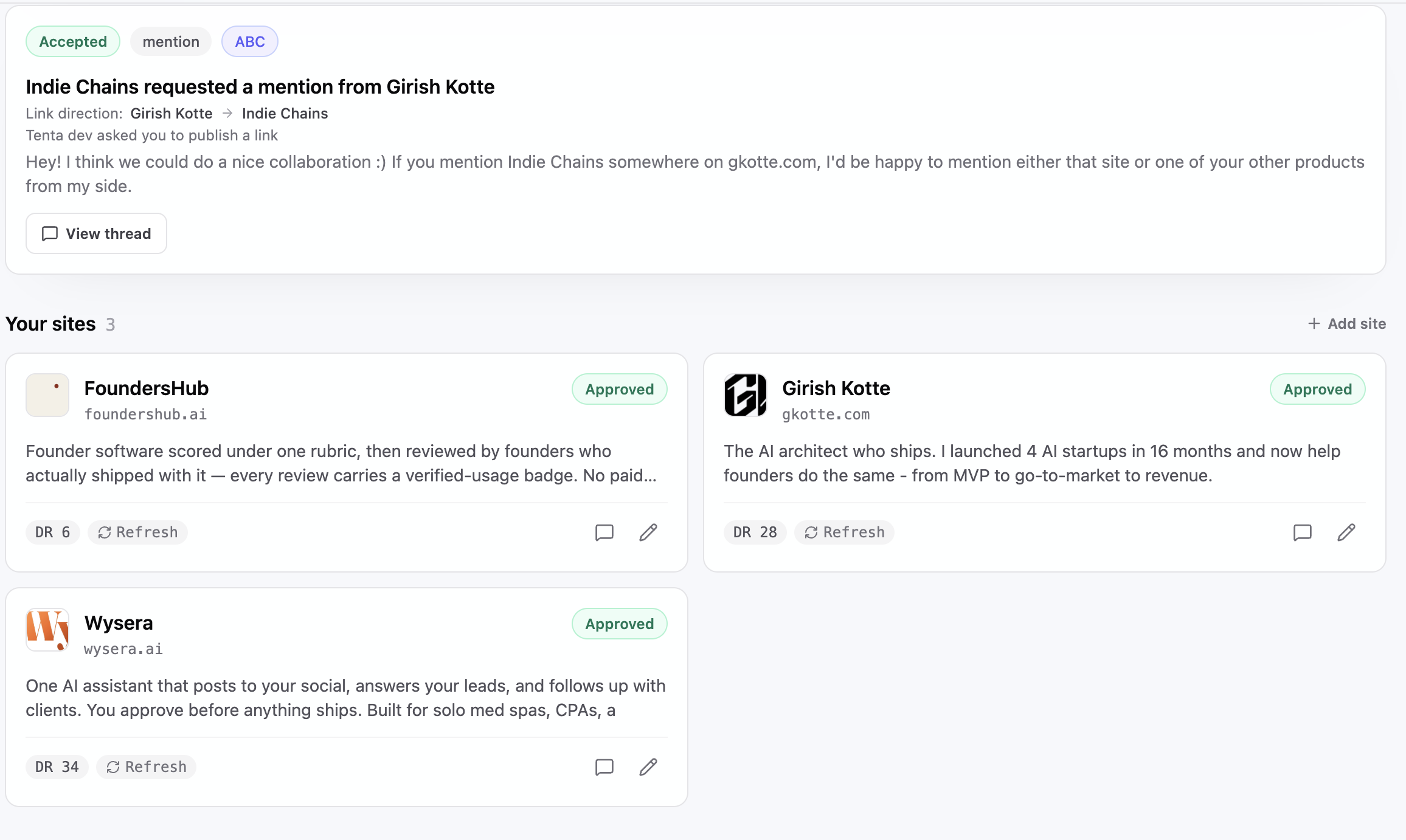 A real collaboration request inside Indie Chains: a specific, context-rich ask tied to the exact page it fits, with both founders' approved sites in view.
Here's the contrast that makes it click:
| Cold outreach | Curated collaboration | |
|---|---|---|
| Recipient | Stranger, didn't opt in | Vetted member who chose to be reachable |
| Context | Generic, copy-pasted | Built into the request, site-specific |
| Trust baseline | Zero (you're a suspicious email) | Pre-established by membership |
| Workflow | 6 disconnected tools | One discovery-to-placement flow |
| What you optimize | Volume (send more) | Relevance (send better) |
| Realistic outcome | 1-2% reply, mostly no | Fewer sends, far higher conversion |
You send fewer requests and close more of them. That's the entire game.
Why this fits indie SaaS specifically
Big companies can brute-force distribution with budget. Indie founders can't, and shouldn't try. Our advantage was never spend; it's that we can be specific. We know exactly who our buyer is, which five blogs they read, which other tools they pair with us. A curated network is built for exactly that kind of surgical relevance.
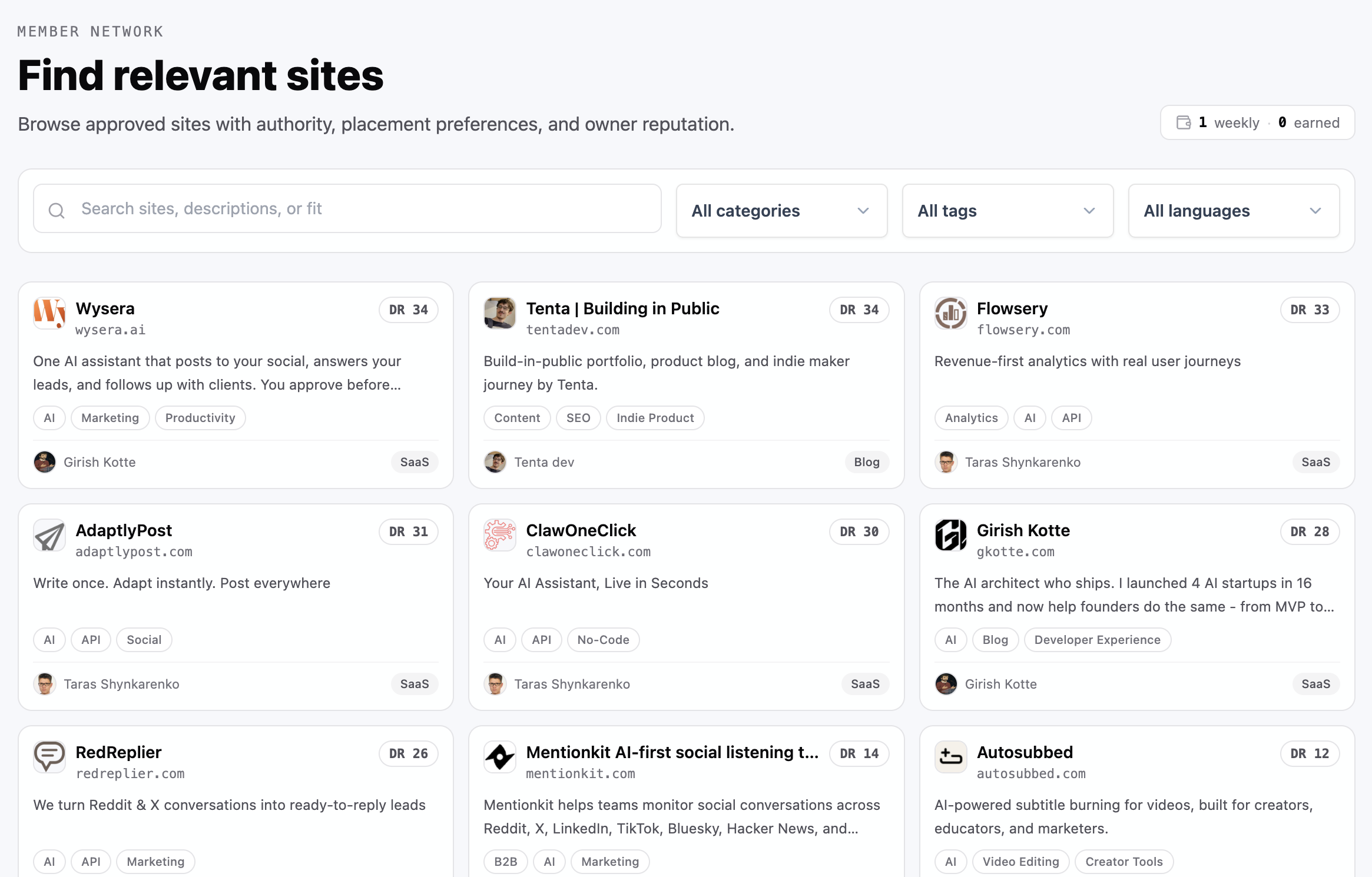 Browsing the member network in Indie Chains: approved sites surfaced with domain authority, categories, tags, and owner reputation so you can qualify fit at a glance.
It also matches how modern founders actually want to operate: faster discovery, clearer qualification, and lightweight execution that gets you from "found a prospect" to "closed a collaboration" without tab-switching across half a dozen apps. The less friction between intent and action, the more often you'll actually do the thing that works.
And critically, it turns distribution from a heroic one-off effort into a repeatable process. The reason most founders only run outreach once is that it's exhausting and demoralizing. Make each interaction relevant, trusted, and managed in one place, and suddenly it's something you can do every week without burning out. Repeatable beats heroic every single time.
How to think about it as a founder
If you take nothing else from this, internalize the reframe: stop treating collaboration as a side activity and start treating it as an operational system.
Concretely, that means:
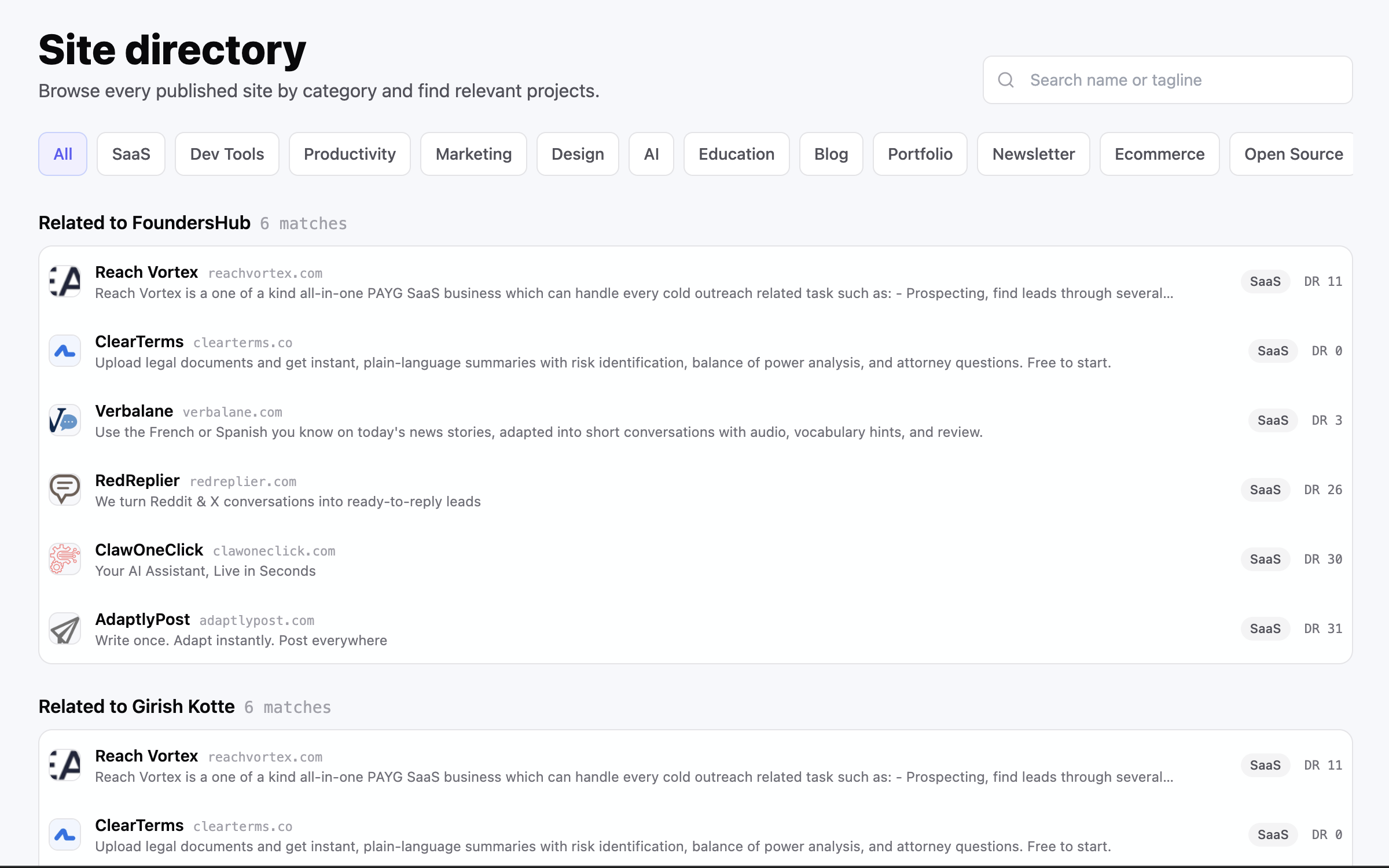 The Indie Chains site directory, organized by category, the practical starting point for finding sites your exact buyer already reads.
- Pick relevance over reach. Ten aligned sites your buyer actually reads beat a thousand random domains. Disqualify aggressively.
- Lead every request with their why, not yours. Before you ask for anything, answer "what do their readers get?" If you can't, you're not ready to send.
- Keep the whole flow in one place. Discovery, the conversation, and the placement should live in one workflow so you can see the whole pipeline, and so you'll actually keep doing it.
- Play the compounding game. One placement leads to a relationship, which leads to a referral, which leads to the next placement. Distribution is a flywheel, not a campaign.
The bottom line
The founders who win the next few years won't be the ones who built the cleverest product. They'll be the ones who solved distribution as deliberately as they solved engineering. They treated finding aligned partners as a system worth building, not a chore to dread.
Your product is probably already good enough. What's missing is a repeatable way to get it in front of the right people through relevance and trust instead of noise. That's the real unlock. Build distribution like infrastructure, and the quiet death that kills most indie SaaS simply stops being your story.
If that's the system you want, it's worth seeing how Indie Chains approaches curated collaboration for indie founders.
Building an AI product and stuck at the distribution flatline? I help indie founders turn scattered growth efforts into a repeatable go-to-market system. See how I can help.
Frequently asked questions
How can indie founders build backlinks and distribution without spam?+
Replace high-volume cold outreach with curated, context-first collaboration. Instead of emailing hundreds of strangers, work inside a vetted network where every site has opted in and is relevant to your audience, lead each request with what the other site's readers gain, and keep discovery, conversation, and placement in one workflow. You send far fewer requests and close more of them because relevance and trust replace volume.
Why do cold outreach and backlink request emails have such low response rates?+
Cold outreach typically gets a 1-2% reply rate because the emails are generic, impossible to personalize at scale, and disconnected from how the recipient actually works. You are asking a stranger to do you a favor with zero context about their site, their audience, or what is in it for them. The problem is not that outreach fails, but that untargeted, context-free outreach fails.
What is Indie Chains?+
Indie Chains is a reviewed collaboration network for indie founders and site operators. Approved members discover relevant sites, send contextual collaboration requests, exchange messages, and manage editorial placements in a single workflow. Every site passes manual review, an Ahrefs domain rating check, and a contextual-fit screen before it can participate, so the network stays useful instead of becoming a link farm.
Is collaboration more effective than paid acquisition for indie SaaS?+
For most indie SaaS, yes. Indie products rarely grow from one large paid channel; they grow through small compounding wins like guest posts, newsletter mentions, cross-promotions, and trust-based referrals. These run on relevance and trust rather than ad spend, which plays to an indie founder's real advantage: knowing exactly who the buyer is and which sites that buyer already reads.
What makes a curated collaboration network different from a backlink directory?+
A directory is a static list anyone can join. A curated collaboration network vets both sides, builds context into every request, and manages the full path from discovery to published placement in one workflow. The vetting establishes baseline trust before you ever reach out, and the built-in context turns 'please link to me' into a specific, relevant proposal an editor can actually say yes to.
How do you turn distribution into a repeatable process?+
Stop treating collaboration as a one-off side activity and run it as an operational system: pick relevance over reach by qualifying sites aggressively, lead every request with the other site's why, keep the entire flow in one place so you can see the whole pipeline, and play the compounding game where each placement leads to a relationship, a referral, and the next placement. Repeatable beats heroic.

Girish Kotte
AI entrepreneur, founder of Wysera (FoundersHub AI) and TradersHub Ninja. Building AI products and helping founders scale 10x faster.
Read more articles