
CES 2026 Recap: AI Everywhere
January 5-10, 2026 • Las Vegas, NV
Walking CES 2026, it was the year AI quietly became the default layer under everything. From agentic AI to smart appliances, here's what stood out to me as a founder walking the floor.
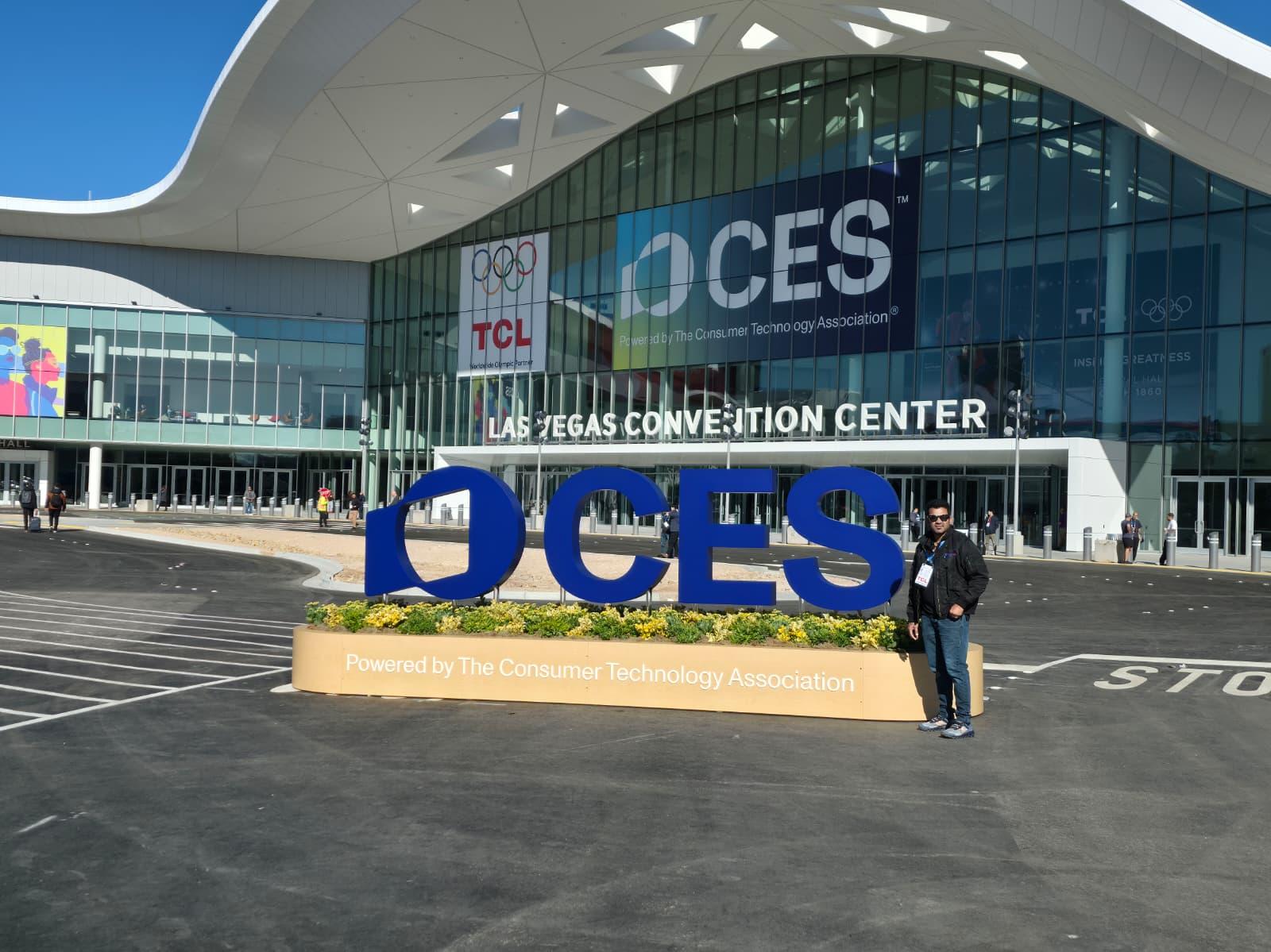
CES 2026 at a Glance
CES 2026 ran January 6-9 across 13 venues in Las Vegas, spanning over 2.6 million net square feet of exhibit space. The show featured innovation across AI, digital health, mobility, quantum computing, robotics, and more.
The unifying theme this year: Physical AI. While previous years focused on digital generative tools, CES 2026 showcased intelligence embedded into hardware, robotics, and autonomous systems.
Major announcements came from NVIDIA (Rubin platform, Alpamayo models), Siemens (Industrial AI Operating System with NVIDIA), Lenovo (Qira AI platform), AMD, Intel, and dozens of robotics startups.
Walking the Show Floor
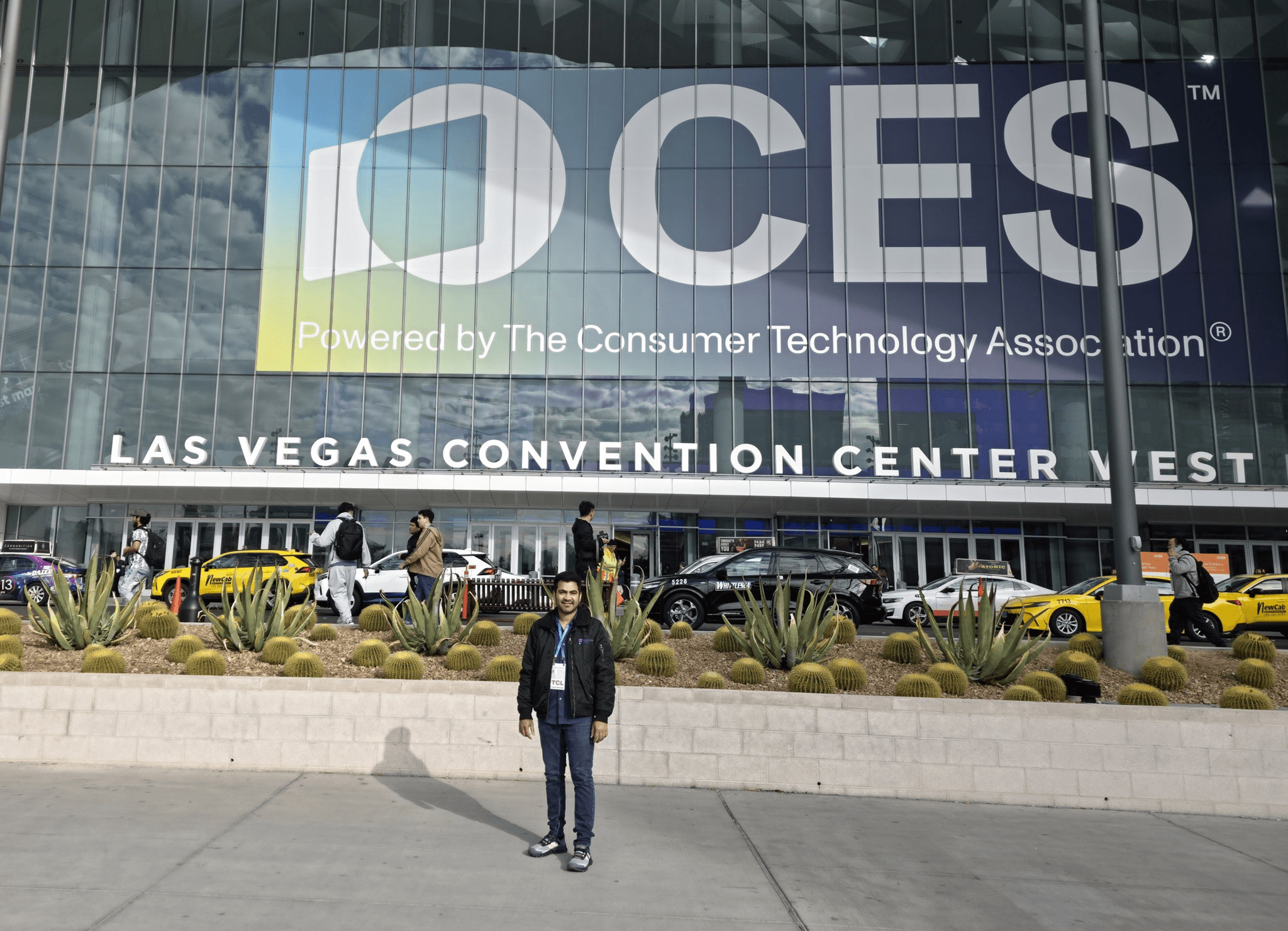
CES 2026 sprawled across LVCC North, Central, West halls, plus the Venetian Expo and Fontainebleau Las Vegas (home to CES Foundry for AI and quantum). The sheer scale was overwhelming.
Siemens kicked off with a keynote announcing their Industrial AI Operating System with NVIDIA. Lenovo took over the Sphere for an immersive showcase of their new Qira AI platform.
From established giants to Eureka Park startups, the message was clear: if you are not building with AI, you are already behind.
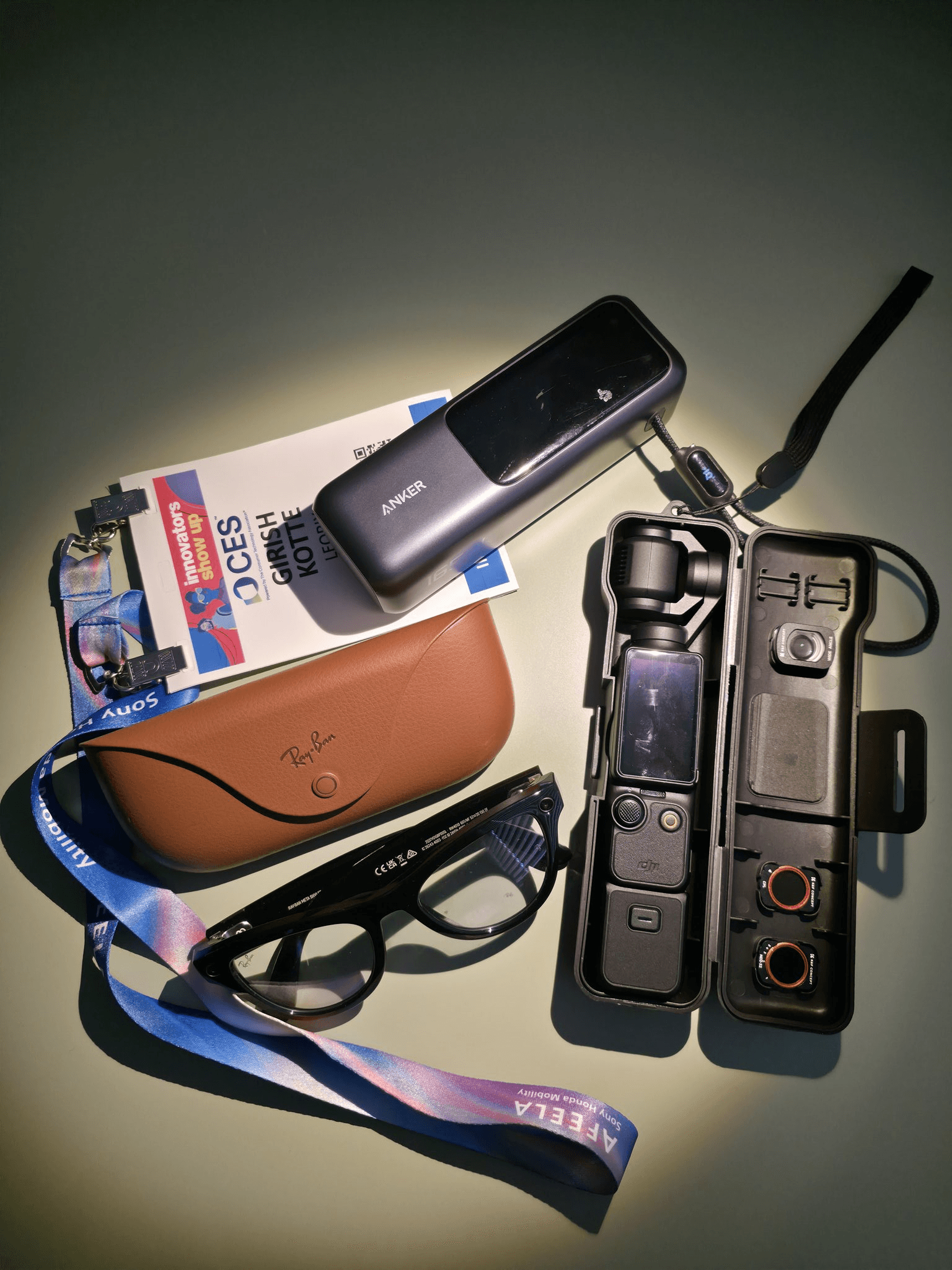
Big Themes Everywhere
Generative & Agentic AI
NVIDIA dominated headlines with the Rubin platform (50 petaflops, 10x throughput vs Grace Blackwell) and six open AI models: Clara (healthcare), Nemotron (reasoning), Cosmos (robotics), GR00T (embodied AI), Earth-2 (climate), and Alpamayo (autonomous driving).
"Agentic AI" was the recurring narrative. Systems that can understand tasks, plan, and execute autonomously across workflows, not just answer prompts.
Ford announced an AI assistant launching in their app before 2027 vehicle integration. Caterpillar unveiled the Cat AI Assistant for equipment management.
AI Demos Everywhere
Every major booth had live AI demonstrations. NVIDIA showed DLSS 4.5 with Dynamic Multi Frame Generation. Mercedes-Benz demoed the CLA with Alpamayo, featuring AI-defined driving.
Siemens and Meta collaborated on bringing Industrial AI to Ray-Ban AI Glasses. AWS, Palantir, and Snowflake showcased enterprise AI integrations.
The demos were not just flashy tech showcases. They showed production-ready AI solving real problems today.
Smart Home, Screens & Personal Devices
Samsung and LG pushed AI-first TVs and appliances. Samsung Bespoke AI adapts cooking, climate, and air quality. LG OLED evo TVs use deep AI for picture and sound optimization.
Lenovo unveiled new ThinkPads at the Sphere, plus Motorola's first book-fold phone, the Razr Fold. G-SYNC Pulsar monitors now deliver 1,000Hz+ perceived motion clarity.
Smart glasses (Meta Ray-Ban AI with Siemens Industrial AI), smart rings, and wearables showed up everywhere as edge devices for notifications, health tracking, and AR overlays.
EVs, Mobility & Autonomous Systems
Mercedes-Benz CLA became the first passenger car with NVIDIA Alpamayo technology. AI-defined driving launches in the U.S. this year, with a EuroNCAP five-star safety rating already achieved.
NVIDIA's Alpamayo R1 is the first open reasoning vision language action model for autonomous driving. AlpaSim provides a fully open simulation blueprint for AV testing.
Ford is launching an AI assistant in their app before a 2027 vehicle integration, with hosting managed by Google Cloud and built using off-the-shelf LLMs.
Innovation on Display
Eureka Park was packed with startups pushing boundaries. AI-powered health monitors, smart agriculture tools, and creative applications I had not imagined before.
CES Foundry at Fontainebleau Las Vegas drew huge crowds for AI and quantum deep dives, featuring sessions from AMD, AWS, Brunswick, and Hitachi.
Siemens highlighted new tech for accelerating drug discovery, autonomous driving, and shop floor efficiency. The energy from founders building the next wave was infectious.
Digital Health & Human-Centric Tech
Digital health had a strong presence. Remote monitoring, at-home diagnostics, and wellness wearables that use AI for predictive insights and personalized recommendations.
NVIDIA's Clara model family targets healthcare AI applications. Health wearables moved from step counters to diagnostic tools and early-warning systems.
Exhibitors framed tech less as pure gadgets and more as tools to improve quality of life, longevity, and everyday well-being.
Infrastructure: Connectivity, Chips & IoT
NVIDIA's Inference Context Memory Storage Platform delivers 5x higher tokens per second, 5x better performance per TCO dollar, and 5x improved power efficiency.
AMD brought Generative Bionics CEO onstage to unveil the GENE.01 humanoid robot. Intel showcased Oversonic Robotics' RoBee humanoid using Core Ultra 3 processors.
Broadband, 5G, and Wi-Fi evolution were the invisible backbone of demos. DGX Spark achieves 2.6x performance improvement for large models.
Exploring the Exhibits
The robotics section was particularly impressive. AMD's GENE.01 humanoid, Intel's RoBee robot, plus pool cleaners, lawnmowers, and home assistants with embedded AI.
NVIDIA's Cosmos and GR00T models power the next generation of embodied AI. Emotional robots and "companions" are testing affective computing in real-world interaction.
What struck me most was how many of these were moving from prototype to production-ready systems shipping this year.
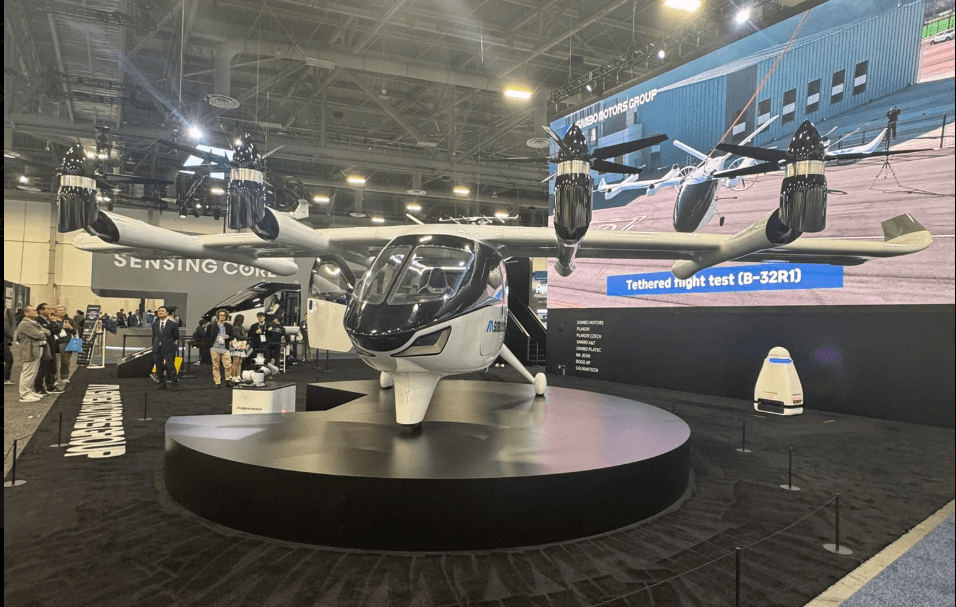
Category Highlights
📺Consumer & Home
- • AI-first TVs (Samsung Neo QLED/OLED, LG OLED evo) optimizing audio/video with deep AI integration
- • AI-powered appliances (Samsung Bespoke AI, smart air, cooking, climate)
- • Quirky products like LG's AeroCatTower: air purification meets tech-enhanced cat perch
👓Wearables & AR
- • Smart glasses like XREAL's AR line and color-shifting glasses
- • Next-gen smart rings pointing to more ambient, screenless interfaces
- • Health wearables moved from step counters to diagnostics and early-warning systems
🤖Robotics & Physical AI
- • Robots ranged from humanoids and robot dogs to practical helpers
- • Pool cleaners, lawnmowers, and home assistants with AI
- • Emotional robots and "companions" testing affective computing in real-world interaction
🧠AI for Content & Workflows
- • Generative AI tools for content creation, communication, and productivity
- • PC chips optimized for AI workloads to cloud platforms with turnkey agent workflows
- • Narrative shift from "AI as a feature" to "AI as a co-pilot/agent"
The Future is Here
Walking through the exhibits, it became clear that AI is not just the future. It is already here, embedded in everything from our TVs to our cars to our health devices.
250+ games now support NVIDIA DLSS 4 technology. The Rubin platform reduces token generation costs to approximately one-tenth of the previous platform.
For founders, the question is not whether to build with AI, but where the biggest opportunities lie in this rapidly evolving landscape.
What This Means for Founders
"The real winners at CES 2026 were not the flashiest booths. They were the companies quietly turning AI into dependable infrastructure for everyday life."
"Physical AI was the theme. Intelligence embedded in hardware, robotics, and autonomous systems that can navigate the real world, not just digital generative tools."
"For founders, the message is simple: the hardware race is crowded, but the opportunity to build vertical AI agents and service layers on top of this new device fabric is just getting started."
Key Opportunities I See:
- ✓ Vertical AI Agents: Build specialized agents for specific industries on top of the new device ecosystem
- ✓ AI-Native Services: Create services that leverage the AI infrastructure now embedded in consumer devices
- ✓ Integration Layers: Connect the dots between AI-powered devices to create seamless workflows
- ✓ Enterprise Applications: Apply consumer AI innovations to B2B and enterprise use cases
Connect With Me
Follow for More Insights
More Resources
Couldn't make it to CES 2026?
Get the full recap, key takeaways, and presentation slides delivered to your inbox. Everything you missed, condensed into one resource.
Frequently Asked Questions
Everything you need to know about CES 2026 and Girish's key insights
The dominant themes at CES 2026 were: Generative & Agentic AI embedded in everything from TVs to cars, AI-first smart home devices, autonomous vehicles and EVs reaching commercial maturity, digital health wearables with predictive AI, and advanced infrastructure (5G, Wi-Fi, new chips) powering it all.
Agentic AI refers to AI systems that can understand tasks, plan, and execute autonomously across workflows, not just respond to prompts. At CES 2026, this showed up as digital workers, autonomous orchestration layers in devices, and AI assistants that can get things done end-to-end without constant human input.
Standouts included: Samsung and LG's AI-first TVs and appliances with 'affectionate intelligence', NVIDIA's AI software stack announcements, smart glasses and AR wearables from XREAL and others, health wearables moving from tracking to diagnostics, and humanoid robots and AI-powered home helpers.
Key opportunities include: building vertical AI agents for specific industries, creating AI-native services that leverage embedded device AI, developing integration layers connecting AI-powered devices, and applying consumer AI innovations to enterprise and B2B use cases.
You can book a strategy call with Girish at gkotte.com/calendar to discuss how the CES 2026 trends apply to your business. He helps founders with AI product go-to-market strategy, AI integration planning, and identifying AI opportunities for their specific industry.
Girish Kotte is the founder of Wysera (now FoundersHub AI), AI/DevOps Architect at QliqSOFT, and AI Advisor at Startups.com. He's helped 100+ founders with AI go-to-market strategy and is the author of 'It Started with a PROMPT'. He attended both CES 2025 and CES 2026.
Girish's key takeaway: the hardware race is crowded, but the real opportunity is building vertical AI agents and service layers on top of the new AI-embedded device fabric. The winners weren't the flashiest booths. They were companies turning AI into dependable infrastructure for everyday life.
Visit gkotte.com/daily-mix for daily AI tips, tools, and prompts. You can also check out gkotte.com/prompting for AI prompt templates, or follow Girish on X (@gkotte1) and LinkedIn for ongoing insights from CES and the AI industry.